How do I decide what to read next? Many times I’ll see a review or mention of a new-to-me book or author that sounds intriguing, and give that a try. Bookstores are alluring places to find new and different books, and Amazon’s recommendations and special offers are almost as good - Amazon’s book prices are great too. And it’s always a treat when a conversation or e-mail with friends and family leads to some wonderful reading. But a lot of my reading is directed by a generating or branching effect, from something I’ve read, or from a movie or TV program. I think of this as something similar to a family tree.
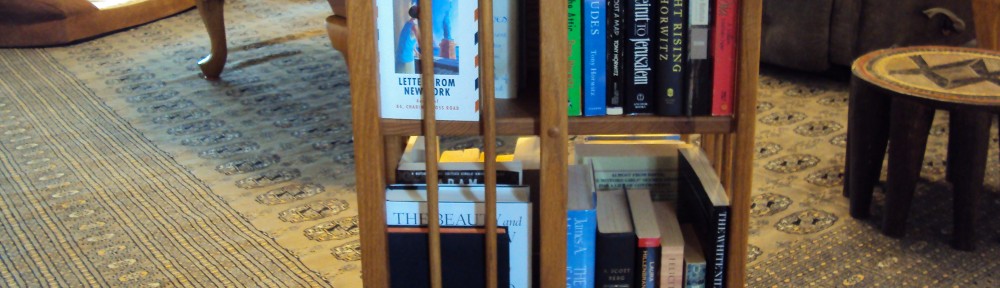
For example, this is the Nile tree: By chance I picked Alan Moorehead’s The White Nile out of the revolving bookcase last week, and Moorehead’s rich writing and the exciting stories of the Nile explorers quickly drew me in. The great BBC series The Search for the Nile, broadcast in the US in 1972, first inspired me to read this book years ago. My 1983 Penguin edition of the book is very attractive; large format, good paper and interesting pictures. When I finished the book, I wanted to know more about European exploration and colonization of Africa in the late 19th century, and I remembered that I had a book called The Scramble for Africa, by Thomas Pakenham. I checked the table of contents, and saw the book was a comprehensive account of exactly those topics. I’m 150 pages into the book’s 680 pages, and already there are more details and perspective on the Nile explorations and political exploitation of the region, and lots of new stuff. I bought this book about 15 years ago because I’d read Pakenham’s The Boer War, which is excellent, and I’m glad that Moorehead’s classic book about the White Nile finally pushed me to read Pakenham’s other African history book. The Pakenham branch of the Nile tree just reminded me of a gorgeous Pakenham book I bought last year called Remarkable Trees of the World. Turns out Thomas Pakenham’s love of African history is matched by his love of trees and photography, and this will be the perfect book to browse when I want a break from The Scramble for Africa, which can get pretty depressing from time to time. Also love that the Nile tree has led me to – trees.
Where else might the Nile tree take me? Alan Moorehead loves loves loves semi-colons and colons, and uses them well. This type of punctuation has gone out of style since The White Nile was first published in 1960 - maybe I’ll read Eats, Shoots & Leaves by Lynne Truss again, to enjoy the company of someone else who loves elegant punctuation. This truly entertaining book is subtitled “The Zero Tolerance Approach to Punctuation”, an unusual topic for a book that hit number one on bestseller lists in the UK. Moorehead also wrote a companion book called The Blue Nile. My edition is a scruffy mass market paperback with very small print, maybe I’ll treat myself to the nice-looking trade paperback Amazon is selling. So delighted that both Nile books are still in print.
The Siege of Krishnapur tree is still pretty small, but I’m trying to grow it. I did start watching my DVD set of The Jewel in the Crown, a BBC TV series set in India during and just after World War 2, again. I’m so familiar with this series that it makes a great accompaniment to ironing, since I enjoy it but don’t have to give it my full attention to keep up with the story. Not in the mood right now to read The Raj Quartet, Paul Scott’s novels that are the basis for the Jewel series. So I bought two new Kindle books about India. I have high hopes for a novel called The Kashmir Shawl, by Rosie Thomas. It’s set in India during World War 2 and in the present day and sounds mysterious and romantic. The curious thing about this novel is that I bought it on Kindle, but the hardcover won’t be published in the US until next year. The second book is The Indian Mutiny by Julian Spilsbury, also published only on Kindle in the US. Spilsbury is a journalist and TV writer, these should be good qualifications for making this history book interesting as well as informative. I’m particularly pleased with these new purchases because they are new books! That I haven’t already read!
War Horse, the book and the movie, is still a shrub, I don’t know if this will take me any further. I didn’t like the movie that much, not as compelling and without the internal logic of the book.
Note to self: A very recurring British theme to this post. Read more American books! At least finish Midnight Rising.