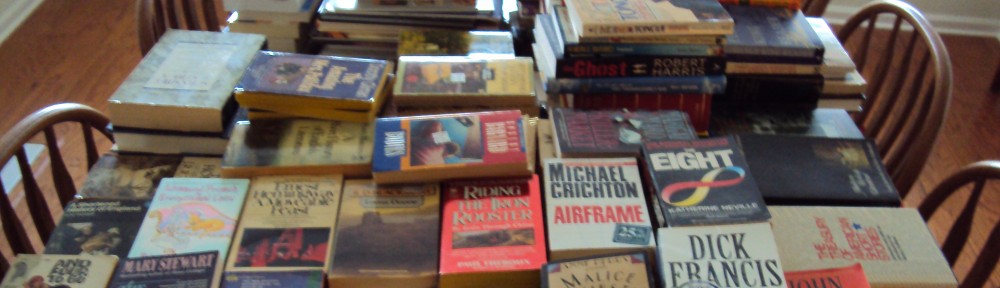
Series Roundup

I have had favorite mystery series for a long time: Deborah Knott (Margaret Maron), Mrs. Pollifax (Dorothy Gilman), V.I. Warshawski (Sara Paretsky), Tess Monaghan (Laura Lippman), Jane Whitefield (Thomas Perry) and of course Agatha Christie’s Hercule Poirot and Miss Marple and Dorothy L. Sayers’ Lord Peter Wimsey.  This year I had the good luck to discover five new book series:  Historical mysteries Maisie Dobbs (Jacqueline Winspear), Maggie Hope (Susan Elia MacNeal) and Phryne Fisher (Kerry Greenwood); historical thriller Cotton Malone (Steve Berry) and hardboiled detective thriller Elvis Cole (Robert Crais).  I’ve written about Maisie Dobbs and Maggie Hope in other posts; in this one I want to summarize the Cotton Malone and Elvis Cole books I’ve read so far, as well as the second Phryne Fisher book.

Steve Berry’s Cotton Malone historical thrillers are chock-full of detailed historical information and lots of heroic derring-do and villains plotting deviously.  The struggles between the heroes and villains take place in contemporary times, with the underlying history of each struggle revealed as the plot hurtles forward.  Eight Cotton Malone novels have been published to date, with the ninth due in May 2014.  I have finished the first three so far.

  1. The Templar Legacy:  This is Berry’s fourth book and first in the Cotton Malone series.  It was written not long after the huge success of Dan Brown’s The Da Vinci Code, and both books share ‘the lost secrets of ancient power’ theme.  But hey, Da Vinci Code spawned a lot of imitators, and Steve Berry has got to be one of the better ones, with his own distinctive voice and competence as a writer.  Briefly:  After his abrupt retirement from a stressful career as a covert operative for the U.S. Justice Department, Cotton Malone runs a bookstore in Copenhagen.  He finds out that his old boss is in Denmark on personal business, and quickly comes to her aid as the personal business turns mysterious and deadly.  Their search for the villainous perpetrators and the race to the secret of the Templars’ treasure converge near an ancient monastery in France.  The pace isn’t as peppy as Dan Brown’s, but the history is more detailed and fully developed. (library eBook)
  2. The Alexandria Link: Cotton Malone’s peaceful existence as a Copenhagen bookstore owner is again shattered when he learns that his teenage son Gary is being held hostage to force Cotton to reveal the secret that will lead to the lost Library of Alexandria.  Cotton’s bitter ex-wife Pam helps him rescue Gary from the kidnappers,  and joins him and some other good guys in following clues across Europe and to the lost Library’s hiding place in the Sinai.  I liked this one; the subject of the Alexandria library felt fresh, and Cotton and his friends and family are good company on an exciting chase. (library e-Book)
  3. The Venetian Betrayal:  This one was goofy.  The story of Alexander the Great and his tragic love for his friend whatshisname is boring, and the mystery of Alexander’s lost grave is a stale subject.  Cotton Malone and friends race the whack-job female dictator of a newly independent Central Asian country and her minions to the lost grave, where a secret elixir of great power is buried with Alexander and his chum.  The plot is convoluted and dull at the same time, but I still liked Cotton Malone’s determination and the loyalty and cooperation he shares with his friends.  I got this one from the lunch bunch book swap, and the library seems to have all the other books on eBook, so Cotton Malone is a no-cost guilty pleasure.

The first book I read by Robert Crais, The Two-Minute Rule, was from the lunch bunch book swap, and was a good book and still, so far, my favorite.  I paid $1.99 for another one, Chasing Darkness, when it popped up as a Kindle Daily Deal.  This book introduced me to Robert Crais’ series detective Elvis Cole, who was worth tracking down in the public library’s eBook holdings.  There are a LOT of Elvis Cole books; I have read three so far, I think in reverse order of publication date:

  • Chasing DarknessAs a forest fire sweeps down a Los Angeles canyon to a cluster of houses, a policeman evacuating residents from the area discovers a very dead body in one of the houses.  Evidence found with the body of Lionel Byrd points to the dead man as a serial killer of young women.  When Elvis Cole hears about the death, he realizes that, as investigator for Byrd’s defense lawyer in a trial two years ago, he found the evidence that set Byrd free, allowing him to kill more women.  Cole’s integrity and sense of guilt drive him to discover what really happened and the depth of his own culpability.  I think this is one of the later books in the series, and the kind of book I enjoyed reading at the time, but now remember very little about.  In such situations, a glance at the blurbs on a real book and a quick flip through the pages help to jog the memory; with Kindle books, I have to check on Amazon.
  • The Last Detective:  This one was very good.  Elvis is taking care of his girlfriend’s 10 year old son, when the boy is snatched while playing in the canyon behind Elvis’s house.  When the kidnapper calls, he accuses Elvis of committing atrocities as a soldier in Vietnam, and demands a large ransom in reparation and to return the boy.  Elvis and his stoic friend Joe Pike search for clues to discover the real reason for the kidnapping and find the boy, as the child’s millionaire father arrives in Los Angeles to hysterically meddle in the efforts to rescue his son.  Elvis’s anguish as the child remains in terrible danger and his cherished relationship with his girlfriend unravels is very realistic, and the impact is memorable – although I can’t remember the names of the child, the girlfriend, or her ex-husband.  (library eBook)
  • Stalking the Angel:  Didn’t like this one, all the characters Elvis deals with in his case are nasty.  As I remember, there is a stolen antique samurai manual of great value, a nasty businessman, his weird daughter and idiot wife, the Japanese underworld, a cult, and too much gruesomeness.  Since this book came early in the series, however, there is quite a bit of information about the tough beat-up former stray cat that is a fixture of Elvis’s household, as well as more backstory for tough guy Joe Pike.  The book has still soured me a little on the series.  I think I will try another one of the well-reviewed stand alone books next.

I read Flying Too High, the second book in the Phryne Fisher series set in 1920s Melbourne, Australia.   In this book, a young man who owns a flying school is suspected of the bludgeoning death of his unpleasant father, and the young man’s mother and sister ask Phryne to help clear his name.  In the book’s other investigation, Phryne and her cohorts Dot, Cecil and Bert search for the kidnapped daughter of a lottery winner.  The little girl is feisty and precocious, her distraught family is sweet, and the kidnappers are both bumbling and menacing.  Book Phryne is still not as adorable as TV Phryne on Miss Fisher’s Murder Mysteries, but the books are fun, and make me appreciate the TV series even more.

I am not-so-patiently waiting for Margaret Maron’s next Deborah Knott book to come out in August 2014, and in the meantime I’m happy I found some good series books to read.  I read through all of my other favorite series books long ago – or so I thought.  I went on Amazon to check the correct spelling of Sara Paretsky’s first name, and discovered that Paretsky has been writing more V.I. Warshawski novels!  Vic was one of the first and greatest tough female detectives, and I’m excited to discover she’s still around.

Tried and True

I’ve been so busy reading that I haven’t made time to write in quite a while.  I have been keeping a list of what I’m reading, and the books kind of sort themselves into categories.  First one is the Tried and True, all books that I own by some of my favorite authors.

In my last post, I had just started reading Fatherland, by Robert Harris.  I read this book years ago, and the only thing I really remembered about it was the setting in a post World War II world where the Nazis didn’t lose.  I had a vague idea that the story was a murder investigation by a homicide detective in occupied Britain, but the murders and investigation happen in Germany.  I thought Harris did a great job of establishing the historical base of real people and events in Nazi Germany, then extrapolating forward to 1964, just before Hitler’s birthday celebration and a state visit by the U.S. president.  Harris’ hypothetical Berlin is a plausible setting for a standard issue maverick homicide detective with ex-wife issues who gets a lot more interesting as he stubbornly persists when a murder investigation takes him deep into the worst of past and present Nazi evildoing.  Robert Harris is a true favorite of mine; I wish he had written more books.

I have never been that interested in John Le Carre’s post Cold War books; I have several that I had bought but never read.  Our Game, written in 1995,  is one of the first, about a British intelligence cold warrior put out to pasture when his experience is no longer considered useful.  I found the storyline about the former agent and his gorgeous much younger girlfriend tedious, but then the girlfriend runs away with another former agent whose unquenchable idealism and adrenaline addiction take the story into the Chechnyan separatists’ fight against the Russians, and the history of their struggle is tragic and still timely.  I finished this book not long before the Boston Marathon bombings, and the way the information about the bombers and their family’s background in Chechnya and Dagestan meshed with the grim details in Our Game was eery. 

I read Mrs. Pollifax and the Lion Killer, and trusty Dorothy Gilman did a believable job with the cultural and political atmosphere of this good story set in the imaginary African country of Ubangiba.  Unfortunately, this is the last Mrs. Pollifax book and there will be no more.  Good thing I enjoy rereading books from this series.

My Deborah Knott series reread book was Killer Market, set in the furniture showrooms in High Point, North Carolina.  I haven’t been to High Point, but we’ve visited the huge furniture mall in Hickory NC; bought furniture there too.  Margaret Maron is good at researching the details for her books, and even better at folding them smoothly into the plot.  Love this series, am waiting impatiently for the next book.

I always need a collection of short stories on hand as a break or a stopgap.  The most recent ones I’ve read are by longtime favorites Agatha Christie and P.G. Wodehouse.  Christie’s Thirteen Problems (Miss Marple) and Labors of Hercules (Hercule Poirot).   were packed away in boxes for several years, so it was good to see them again.  I have several Christie short story books, but need to do research to see if there are any more of hers out there.  My current ‘need to read’ book is Meet Mr. Mulliner, by P.G. Wodehouse.  No Jeeves and Bertie Wooster in these short stories, but Mr. Mulliner and his many relations are classic in their own right. 

I have to admit that even I can reread books too many times:  I just about have the short story collections on my shelves committed to memory.  So I’ve started reading my Calvin and Hobbes books again, still incredibly good.  


Chewing gum for the brain

Reading only “chewing gum” type books for a while is not a bad thing, I tell myself.  Nothing wrong with a well-written fast read with appealing characters and a good plot.  So I enjoyed popular novels by some old and new favorite authors over the holidays, and now I’m ready to get back to a mixed diet of solid non-fiction and more challenging novels, with some fun skim-through-the-middle stuff on the side. 

I read my last library book, The Nearest Exit by Olen Steinhauer, and enjoyed it very much.  This is the second Milo Weaver book, and is even better than The Tourist.  Good backstory about meeting his wife years before, and a well worked out plot.  I usually don’t like flashback books that much, but these flashbacks are really well done and serve the story.  I’ll try some of Steinhauer’s East European novels next.

Christmas Stalkings was a seasonal selection, a good anthology of new (in 1991) and classic mystery stories, all set around Christmas.  This is my book, and I’ve read it before, but it was in storage for several years and the stories seemed fresh, as well as very good fun.

I also skimmed through Bloody Kin, by Margaret Maron.  This is the first book she wrote with the Colleton County NC setting; Deborah Knott, who later got her own excellent series, is a secondary character in this book.  Deborah’s brother-in-law. his wife Kate and her extended family are the main characters in Bloody Kin, and their family has an important role in the latest Deborah Knot mystery, The Buzzard Table.  It has been a very long time since I’ve read Bloody Kin and I wanted to refresh my memory of these characters’ story.  Good book, worth digging it out of my paperback stacks.  It also inspired a fit of nostalgia about two other favorite writers, Dorothy Gilman and Helen MacInnes.

Dorothy Gilman wrote some good stand-alone novels, but she is best known for the Mrs. Pollifax books, another favorite series of mine.  Mrs. Pollifax is an elderly lady who spies for the CIA from time to time: feisty, open-minded, not as twee as she sounds.  Gilman does a credible job of researching the people, geography and current political issues of the times and countries where Mrs. Pollifax has her adventures, which makes them informative as well as fun.  Although the author and her character have both sometimes been gushily positive over foreign political movements that look less attractive in retrospect, Mrs. Pollifax is an endearing, honest and moral character and I always enjoy spending time with her.  Amazon had the last three Pollifax books – Mrs. Pollifax Unveiled (set in Syria); Mrs. Pollifax, Innocent Tourist (Jordan); and Mrs. Pollifax and the Lion Killer (the imaginary but credible African country of Ubangiba) - in inexpensive paperback editions, so I bought them to complete my Mrs. Pollifax series.  I also bought the second Madame Karitska book, Kaleidoscope, for my Kindle, reasonably priced and the only version currently available in print.  Kaleidoscope, and the first book, The Clairvoyant Countess, are episodic novels that are almost like individual short stories, so great for picking up, putting down and picking up again later.  I have read all of the new purchases except Lion Killer; I got sidetracked by one of my old Pollifax books, Mrs. Pollifax and the Second Thief (set in Sicily). 

All of Helen MacInnes’ books are currently out of print, and the library doesn’t have them, so I bought North from Rome (1958) and The Venetian Affair (1963) from two of Amazon’s used booksellers – one even had free shipping through Amazon Prime.  Both are in good condition considering their very reasonable prices; I’ve had good luck so far in all my Amazon used bookseller purchases.  The books are two of MacInnes’ best Cold War thrillers; rather earnest and prim, which I suppose fits the time in which they were written, but good, exciting, well-written novels.  A publisher will start issuing reprints of the MacInnes books in both paperback and Kindle editions starting with Above Suspicion and Pray for a Brave Heart at the end of January, with more following every four to six weeks.  Very glad to see this author’s books on the market again and available to new readers.   

I also bought a used copy of Crime through Time II through Amazon – the book cost 1 cent, and 3.99 for shipping, which is a pretty good deal for a paperback in good condition.  The book’s short stories are a mixed lot as far as quality, and too many are set in Ancient Times, the most boring and un-credible settings for me.

Last, I read two books from the monthly senior lunch book swap:  Lie Down with Lions, by Ken Follett, and The Jackal’s Head, by Elizabeth Peters.  I have never enjoyed any of Follett’s books as much as I did The Eye of the Needle and The Key to Rebecca, and I’m no more enthusiastic about Lie Down with Lions.  The setting in Afghanistan during the Soviet Russian occupation is interesting, but the characters and plot are clunky and over familiar.  I know Follett wrote a lot of books, so I’ll keep trying, as long as I don’t have to pay any money for them (keep checking the library).  The Jackal’s Head has Peters’ (too) familiar Egyptian archaeology setting, but in modern times for this one.  Libraries always seem to have lots of Elizabeth Peters’ books, and they turn up often in book swaps, so I can easily indulge this guilty pleasure (they are fun), and then take the books back where they came from, or pass them on to another book swap.