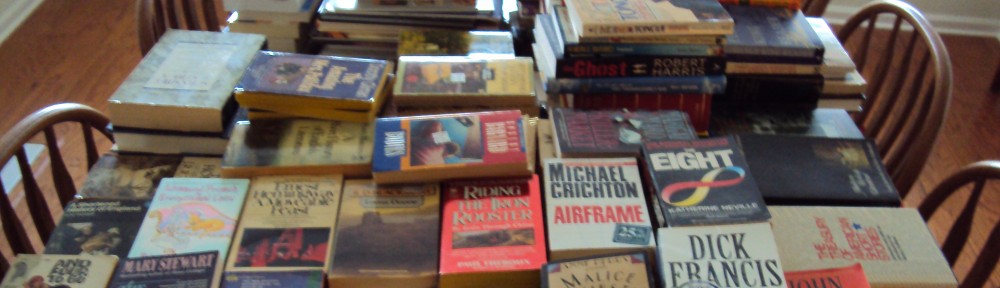
Current books, March 21, 2012

The Siege of Krishnapur, by J.G. Farrell (my book).  I read this book about 20 years ago, and was happy to see it again.  It takes place during the Indian Mutiny in 1857.  A group of British East India Company employees, English planters and businessmen, and their families, take refuge in the Company’s compound from mutinous Indian sepoys.  They, and some Indian army pensioners, hold out during a months-long siege by endurance, courage and adaptation, and in spite of many foibles and weaknesses.  I am about halfway through this book, although I have done some of my usual forward flipping through the rest of it.  My favorite character is the Collector, the heroic head bureaucrat for the Company in Krishnapur.  He is the only person who sees trouble brewing, and tries to warn the authorities, exciting much ridicule and scoffing from the British community. The author did extensive research into the Indian Mutiny and life under the British Raj in the 19th century, and read many personal accounts of those caught up in the Mutiny.  The story’s tone and the characters’ thoughts and actions are realistic and compelling, the action and romance are thrilling, and the clashes between Church of England theology, Victorian ideals of progress, duelling medical standards and rejection of materialism make the story even better. 

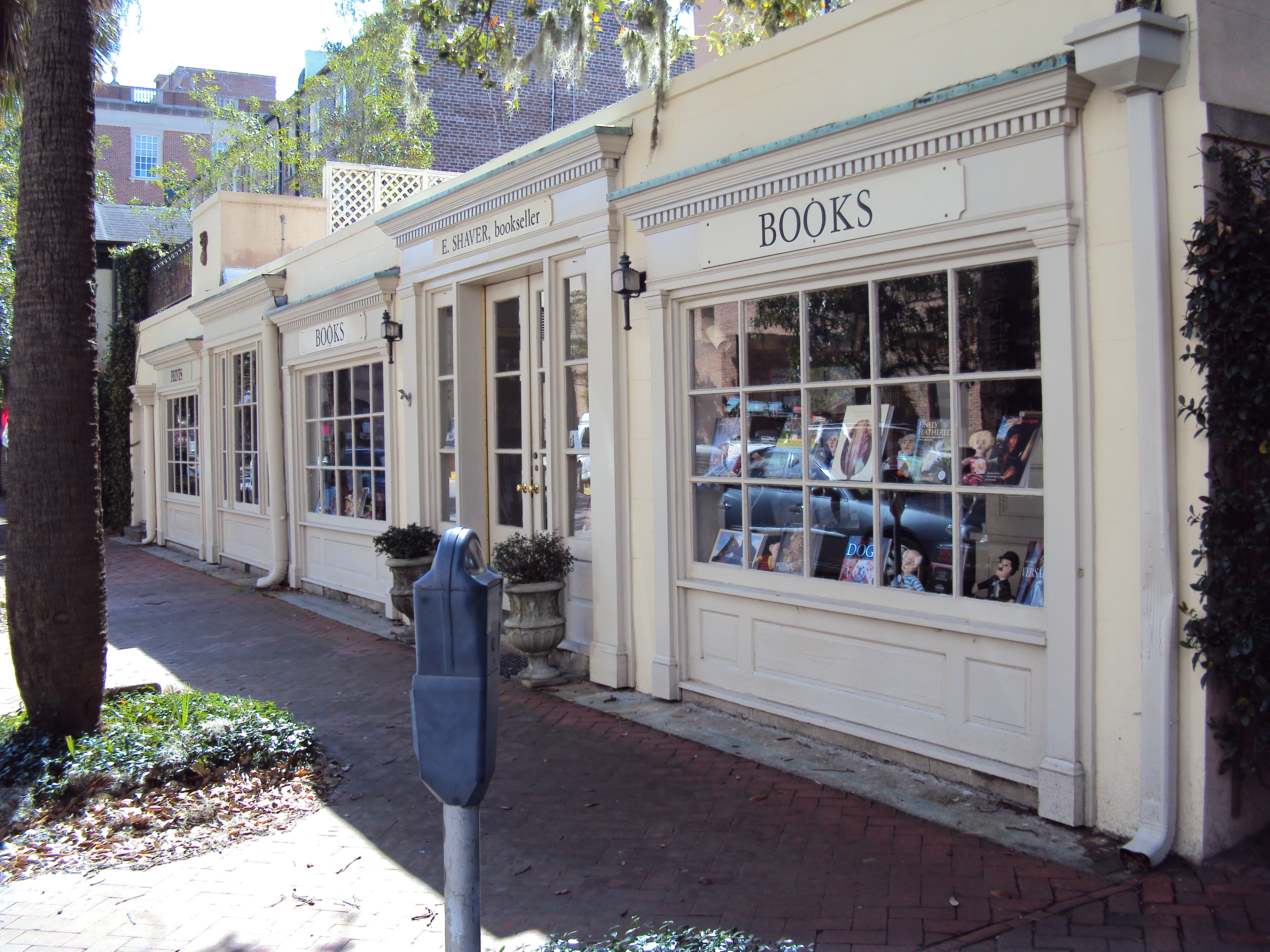
A Nation Rising, by Kenneth C. Davis (my book).  I bought this in a moment of book lover’s bliss in a wonderful bookshop in Savannah.  Kenneth C. Davis wrote Don’t Know Much About History:  fast, lively chunks of history that are useful to know.  This book seems more ambitious; the author has chosen little-known but, in his opinion, significant events in American history 1800 – 1850, and tries to relate them to concepts and events in contemporary America.  I’ve read the first chapter, about Aaron Burr, and it was a very good historical account, with some important points about judicial developments in the early years of the Republic.  However, the author’s attempts to tie these events to specific current events seem forced and don’t ring true, even though I am in sympathy with many of his ideas.  I will finish the book for the history.

Boomerang: Travels in the New Third World, by Michael Lewis (Kindle).  I saw this book in the wonderful bookshop, but decided to get some more information about it before buying.  Michael Lewis has written well-known books like Moneyball, The Big Short, and The Blind Side.  I have borrowed several of his books from the library, and could never get into them before it was time to take them back.  Boomerang is a collection of five long articles Michael Lewis wrote for Vanity Fair, and Amazon was selling the eBook for $3.99.  I decided to take a chance on it.  The articles are about the causes and effects of the economic recession in Iceland, Greece, Ireland, Germany and California, and I’ve finished them all except California.  Lewis has the clout to get interviews with important players in the downfall and rehabilitation efforts of the world economy.  His observations about the countries and people he visited are pithy and funny, interesting and entertaining while maintaining a sense of objectivity.  Useful for people who are still interested in trying to figure out how we got into this mess, and want some ideas on how we’re going to get out of it. 

The Sheikh and the Dustbin and The Hollywood History of the World, by George McDonald Fraser (my books).  I wrote a little about these books in a post below on a book I just finished, Flashman on the March

Crime through Time III, edited by Sharan Newman (my book).  This is a collection of mystery stories, always a great “need to read” fallback for me.  This book was in storage; I can’t remember reading it and my copy looks pristine.  Virtually a new book, yay.

In review, I notice that only one of my current books is actually book-length, requiring sustained reading effort.  All the rest can be read in fits and starts.  My attention span doesn’t seem to be getting much better.
Finished some books

Since I wrote my first three posts on March 1, I have finished some books, bought some books, started some books AND managed to get my blog about reading books to display on the Interwebs.  (If you want to start a blog, I have some tips.)  This post is about the books I have finished:

I finished one book that was on hiatus:  We Meant Well: How I helped lose the battle for the hearts and minds of the Iraqi people, by Peter van Buren (Kindle).  This book is a personal, heartfelt account of the author’s frustrations with the prescribed methods of nation-building in Iraq, where he had a Foreign Service assignment on a Provisional Reconstruction Team (PRT).  Just after I finished the book, I read a news article saying that the State Department has taken action to fire Peter van Buren from the Foreign Service.  Nearly all of the reasons cited for firing him have to do with a blog he has kept since his book was published last fall.  My take as a retired Foreign Service Officer (FSO):  the things he did on his blog were stupid and ugly and wouldn’t be acceptable from any FSO.  However, his book is important and interesting; the things he writes about might be embarrassing to State and Defense, but the wacky processes he describes for spending appropriated funds (“the taxpayers money”) ring true.

I finished current book Underfoot in Show Business, by Helene Hanff (my book), an autobiography of the author’s experiences writing for the NYC theater in the 1940s, and writing for television in the 1950s.  Funny, sweet, realistic, great storytelling.  Helene Hanff’s most famous book is 84, Charing Cross Road, about the books she ordered from a used book shop in London after WW2.  The book is short, in the form of letters between Helene and the bookshop, and has cult status with many book lovers.  84, Charing Cross Road, and Q’s Legacy, another autobiographical book, are still in print.  Ms. Hanff’s other books are available through Amazon’s used book sellers.

I also finished Flashman on the March, by George MacDonald Fraser (library book), and actually returned the book to the library before it was due.  I had put Flashman aside for many years, because the bigoted bombast from him and his curmudgeonly creator Mr. MacDonald Fraser finally got to me, but really, given the obnoxious tone of current public discourse, I’ve toughened up a lot.  In their favor, the Flashman books are intelligent, historically accurate and funny, the exact opposite of the aforementioned obnoxious current public discourse.  I got so enthusiastic about my renewed interest in the irascible George MacDonald Fraser that I ordered his book The Hollywood History of the World (from an Amazon used book seller) and started reading a book of his short stories, The Sheikh and the Dustbin (my book), based on his experiences in the British Army.  These books are interesting and clever, but just don’t have the charisma and dash of awful Harry Flashman.  I think I’ll start with Flashman, the first book in the series, and read through them again.  Yes, I still have all of them. 

Away all Boats and Midnight Rising are still in hiatus.  Still reading Ireland in fits and starts.

Current books, March 1, 2012

I only have three books going now, probably because my main book, Flashman on the March, George MacDonald Fraser’s final Flashman book, includes several of the characteristics I like: history, adventure, humor, great storytelling.  “Flashman on the March” is set during the British military expedition into Abyssinia in 1868 to rescue European hostages held by the mad emperor Theodore.  I haven’t read a Flashman book in quite a while, but I read that MacDonald Fraser published this one shortly before his death, and fortunately the library had a copy.  There is a formula to these books:  Flashman - cad, coward, womaniser, shameless self-promoter – finds himself thrown into a real 19th century historical event and experiences the utmost of intrigue, seduction, danger, torture and battle that the history will allow.   Flashman is a bigoted, foul-mouthed untrustworthy witness to history, so the author provides lengthy historical notes at the back of the book with accurate information on the real people and situations that appear in the story.  All very clever and entertaining, although the author sometimes lets Flashman run off at the mouth too long. 

  • MacDonald Fraser is one of the best swashbuckling adventure writers ever:  he wrote the scripts for the great 1973 “Three/Four Musketeers” movies with Michael York and Faye Dunaway.  
  • Theodore and the British rescue mission make up most of The Blue Nile by Alan Moorehead, a classic of history.  It, along with Moorehead’s The White Nile are coincidentally in the revolving bookcase, high on the reread roster. 

My other two books are Underfoot in Show Business, by Helene Hanff, a paperback ragged from repeated reading, and Horrible Histories Ireland by Terry Deary.  Horrible Histories is a British series of smartass, irreverent history books for children, usually pretty accurate, with lots of funny drawings, silly quizzes, disgusting historical recipes and suitable amounts of blood and gore.  I always pick some of these up when I’m in the UK, and have quite a collection.

Books on hiatus (March 1, 2012)

I usually have several books going at once: history, mystery, thriller, short stories, how-to, humor, old favorite.  It’s good to have several strings to my need-to-read bow so I always have something at hand to suit my mood.  A book, usually a new or new-to-me book, goes into hiatus when I’ve started it, like it, want to finish it but it gets put aside so long that it’s due back at the library or vanishes into a big miscellaneous pile of reading material.  Books on hiatus can be identified on my bookshelves because they still have bookmarks in them.  Hiatus books on Kindle are harder to track, as their titles slip farther and farther down on the list.

I only have three books on hiatus now, which is pretty good.  We Meant Well: How I helped lose the battle for the hearts and minds of the Iraqi people, by Peter van Buren, is almost a current book.  When I turn on my Kindle, it still opens in this book, but the Kindle itself slid to the bottom of a pile of books, magazines, catalogs, and paid bills, which is how it got into hiatus status.  Kindle says I’ve read 90% of the book, it’s written in a very readable style, the subject is compelling and the author is a Foreign Service Officer, so this one has a good chance of getting finished soon.  I think I put it aside because it just got too depressing to read about how State and other USG agencies can mess up in spite of the best of intentions and the many (too many?) management controls in place.

I tracked down a copy of Away all Boats,  by Kenneth Dodson, after I found out that my beloved Uncle Ralph served on the real ship that Dodson, an officer on the ship, based his novel on.  The story is so realistic and so detailed that the storyline gets overwhelmed at times, and I got bogged down in it.  This beautiful 1950s vintage paperback is in the revolving bookcase, waiting for me to take it up again.  I think I’ll dip into another book about WW2 in the Pacific, Tales of the South Pacific, by James Michener, as a step back into Dodson.  This is a favorite of mine, with fascinating details about Michener’s experiences in the Navy giving an authentic voice to some great storytelling.  “Away all Boats” has some compelling voices too:  Dodson’s, and my uncle’s voice that echoes in some of the anecdotes included in the book.

I’m surprised that Midnight Rising, by Tony Horwitz, is also a hiatus book, also shelved in the revolving bookcase so I don’t forget about it.  Horwitz is an excellent writer, and his nonfiction books are favorites of mine, so I’m surprised this book about John Brown and the raid on Harper’s Ferry is in hiatus.  The first part of the book has fascinating information about John Brown’s life that was new to me, but the book slid into hiatus at the point where Brown and his band are getting ready to go into Harper’s Ferry.  I know that things are not going to turn out well for Brown and company, and Horwitz is so good that he’s made me care about all of them.  I need to trust Horwitz to not just tell a harrowing story, but put it into historical perspective so the sacrifices these men made, which includes sacrificing some high ideals, make sense.

Recently read books (March 1, 2012)

In no particular order, here are some memorable books I’ve read recently:

The Little Women Letters, by Gabrielle Donnelly (library book).  A novel that imagines the lives of three sisters descended from Jo March, the main character in Louisa May Alcott’s “Little Women”.  The sisters live in London near their American mother and English father, and have personalities and experiences similar to Jo, Meg and Amy from “Little Women”.  The modern day narrative is interspersed with letters from Jo that one of the sisters finds in the attic.  I enjoyed this book a lot more than I thought I would.  I recognized Jo’s voice and many of my favorite “Little Women” memories in the letters, and the modern day sisters’ lives were interesting enough to keep my attention.

  • I need to watch “Little Women” (the one with Susan Sarandon, Winona Rider and Gabriel Byrne) again.

My Year with Eleanor:  A Memoir, by Noelle Hancock (library book).  A nonfiction book about a young journalist, floundering after she loses her cool social media job, who is inspired by a quote from Eleanor Roosevelt.  Noelle follows Eleanor’s advice to “Do one thing every day that scares you”, starting with trapeze lessons and ending with a climb up Mount Kilimanjaro.  She shares some good information about Eleanor Roosevelt’s life, as well as a lot of personal information about her own.  Surprisingly, I found Noelle’s life and her search for courage pretty interesting too. 

  • I liked the movie “Julie and Julia” (based on a book I haven’t read), and this book has a similar structure and theme.

The Hunger Games, by Suzanne Collins (Kindle).  A teenage girl living in a grim and dismal future North America must participate in a game of survival to the death.  This book passed my Kindle test:  it was engaging enough to keep me reading one page after another to the end.  This is against the grain for me, and the main reason I don’t really love my Kindle.  I am a confirmed forward and back page flipper even with books I’m enjoying, and will brazenly read the end and abandon a book if I get bored with it.  I bought the other two books in the trilogy for my Kindle, but so far the second book hasn’t drawn me in.

  • After I read this book, I became aware of all the excitement and anticipation for “The Hunger Games” movie.  I’m also looking forward to seeing it.

Boy and Going Solo, by Roald Dahl (my books).  Two autobiographical books about Roald Dahl’s childhood (Boy) and his first job, in Tanzania – Tanganyika at that time – and his World War 2 service in the British air force (Going Solo).  I started rereading “Boy” as we were getting ready for our post-retirement move from northern Virginia, and brought “Going Solo” to our new home, also a reread.  I’ve read these books several times, and always enjoy them.  Dahl’s real life – his family, friends and experiences – are more engaging to me than his fiction, which I find a little heavy on the snark.  I especially liked his account of living in pre-WW2 Tanganyika, and dealing with the German population as the war began.

  • Now I need to watch “Nowhere in Africa” again, an excellent movie about a girl whose German Jewish family seeks refuge from Hitler’s Germany in East Africa.

The Killer Angels, by Michael Shaara (my book).  I’ve read this before, and agreed with the novel’s stellar reputation, but I’d forgotten what a great book it is.  Shaara selected the perfect Civil War characters from both Union and Confederate sides to tell the story of the battle of Gettysburg.  Just the right amount of detail, just the right amount of emotion. 

  • After I finished the book, I wanted to watch “Gettysburg” again, bought the blu-ray extended version and spent four-plus mesmerized hours watching it.
  • I’ve also read “Gods and Generals” by Michael Shaara’s son Jeff.  This prequel to “Angels” is good, I own a copy but it’s not high on my reread list.  The movie “Gods and Generals” is pretty bad, won’t watch it again. 

Three Day Town, by Margaret Maron (Kindle).  This is the most recent book in one of my favorite mystery series, Maron’s ‘Deborah Knott’ series.  Deborah is a judge in a rural county in North Carolina, I’ve read all the books, and always enjoy reading about her and her friends and relations.  This book is set in New York City, and combines the lead characters from Margaret Maron’s two series, Deborah Knott and Sigrid Harald, who is an NYC homicide detective.  Not one of Ms. Maron’s strongest books, but I love her mysteries so much I bought this for my Kindle the day it was published.